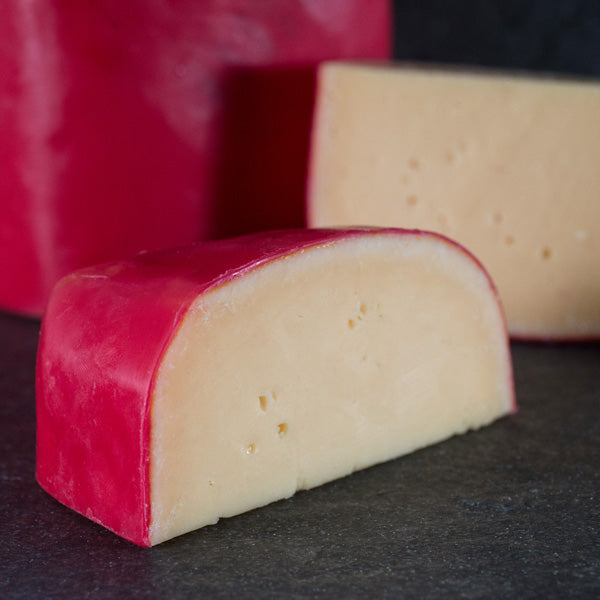
These days, Edam is produced all over the Netherlands. However, Edam's roots go back at least 600 years to the town of Edam in North Holland, which is renowned as an historically significant center of Dutch cheese exports. The town is a few miles north of Amsterdam, facing east across the waters of the old Zuider Zee, a tiny inlet of the North Sea. Edam is a city rich in history, dating back to the 12th century when farmers and fishermen settled along the Ye river, and named their town "Yedam." By the 17th century, this primitive settlement had become a prosperous town. Eventually, Edam had a great number of shipyards that turned out many famous ships, like the Halve Maan (Half Moon): the ship that Henry Hudson sailed in 1609 to look for a northern route to the East Indies, but ended up stranded on the island of Manhattan.
When Peter the Great of Russia decided that Russia needed a navy, he took an entourage of several hundred men to Holland to learn ship building from the world renowned Dutch master-craftsmen. After more than a year of study, he was awarded an official degree of excellence. Some historians claim that he took more pride in this diploma than he did in being Czar. No doubt he enjoyed many a cheese from the village of Edam that tasted exactly like the cheese you’re receiving this month.
Dutch global commercial expansion was also a major contributor to the thriving market for Edam. Today, the Dutch are sixth in the world when it comes to cheese production (sixty percent of what they make is Gouda). They are also the world's largest exporter of cheese.
Note of Interest: It appears that Edam can age for many years under certain conditions, and still be quite edible. The oldest Edam we know about was found at the South Pole in 1956. It had been left there in 1912 by the unfortunate Scott expedition.